CO2 Injection for Planted Aquariums
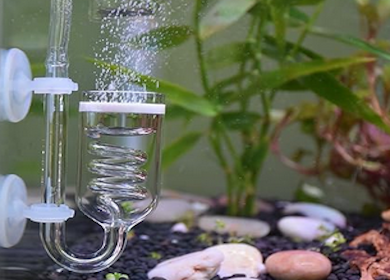
Aquarium CO2 injection significantly boosts plant health, enabling faster growth rates, intense coloration, and lush, compact growth. Injecting CO2 also helps regulate pH when it dissolves in water, forming weak carbonic acid that lowers pH for better nutrient uptake and a stable, slightly acidified environment. By accelerating plant metabolism, it helps fight algae by ensuring plants out compete them for nutrients.
Comparison of CO2 sources
- Commercial non-gas CO2 products (CO2 Booster, EasyCarbo, Flourish Excel, etc)
- Liquid CO2 products can add a small boost when combating algae outbreaks, but cannot substitute for CO2 gas injection
- CO2 tablets are not worth the money
- CO2 gas injection works much better and is more economical
- Bottled, compressed CO2 gas is the best solution for large aquarium collections (large tank and multiple tanks)
- However, it can be over kill for a nano tank, or just a few nano tanks
- Getting bottles refilled somewhere is inconvenient
- DIY CO2 from yeast and sugar rigs is an inexpensive solution for nano aquariums, but inconsistent and unreliable
- DIY CO2 from citric acid and baking soda systems (CO2 reactor kits) are practical and affordable for nano aquariums
- Equipped with stainless steel canister, pressure gauge, regulator, and timer, such a system is consistent and reliable
- The amount of CO2 dissolved in the water column can be monitored easily using a drop checker
Basic DIY CO2 Reactor Kit (eg., Hygger HCO31 CO2 Generator)
- Fill stainless steel canister with dry ingredients, citiric acid and baking soda, then add water to initiate the reaction that forms CO2
- Immediately close the canister with a regulator to trap the CO2 inside, pressure builds within the canister, measured by a pressure gauge
- When the right amount of pressure builds up we can open the regulator and start injecting CO2 in our aquarium
- It takes a few hours to build sufficient pressure in the canister
- Tip: Fill or refill the canister at the end of the photo period, so it will be ready to go by the beginning of next photo period
- The regulator has a solenoid valve on a timer, so the CO2 injection can be shut off automatically at night, when the plants don't need the CO2
- The regulator also has a needle valve and bubble counter, so we can finely tune the amount of CO2 injected into the aquarium
- Note that if the bubble counter is filled with water it will evaporate and need refilling
- Alternatively the bubble counter can be filled with glycerin and it will not evaporate
- An in-tank CO2 diffuser connects to the regulator via air tubing, and disperses the CO2 into the aquarium
- The diffuser must be kept clean to keep bubbles small to maximize absorption of CO2 in the water column
- When the diffuser begins to clog with biofilm and algae, clean it with bleach
- In a cup of water, mix 50/50 bleach and water solution
- With CO2 injection still running, remove the diffuser from the tank and submerge it in the cup for about 10 minutes or more
- Put the diffuser in another cup of fresh tap water and add a half cap of dechlorinater, and allow to soak another 10 minutes
- Return the clean diffuser to the tank
- Use a CO2 drop checker to balance the amount of CO2 in the water
- The drop checker solution should be changed every couple of months
- If solution is blue then not enough CO2, green just right (approximately 30 ppm), yellow too much CO2
- In a 5 gal nano tank, running 7 to 8 hours per day, 1 bubble per second, a charged canister should last 2 months or more
- After all CO2 is used up, open the canister slowly, drain off remaining solution, rinse it out, and recharge
- Note that if crystals remain in the bottom of the canister, dissolve and rinse out with hot water
- If the reagents are mixed properly there should be no crystals leftover
- Citric acid and baking soda are both readily available in bulk