Aquaponics
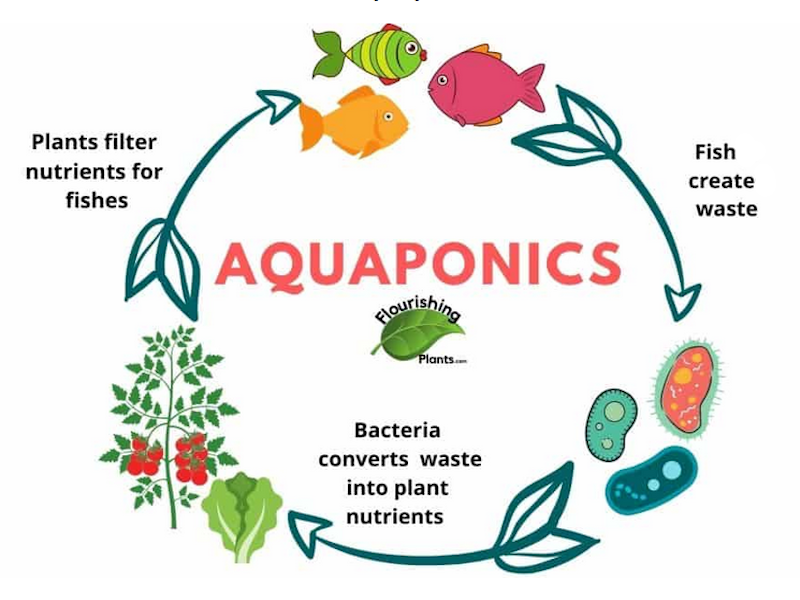
Aquaponics* is a fusion of aquaculture (raising fish) and hydroponics (growing plants without soil). In aquaponic systems there are three main components: Fish, plants, and microbes (mainly bacteria). The fish produce waste rich in ammonia by feeding and digestion, through feces and gills. Beneficial nitrifying bacteria naturally filter the water by converting the toxic ammonia into nitrite and and finally into nitrate. The plants, then, absorb the nitrate as a natural fertilizer, effectively purifying the water for the aquatic life (fish, shrimp, snails). This forms a continuous nitrogen cycle system where plants and fish live and thrive in symbiosis, an ecosystem where plants, fish, and bacteria live in harmony.
In aquariums, riparium plants are grown with roots submerged in aquarium water while their leaves and stems extend emersed into the air. This planting style mimics natural riverbanks and wetlands, creating a powerful biological filter that controls the nitrate and phosphate levels in the water column. Because these plants have unlimited access to atmospheric carbon dioxide, they grow significantly faster than fully submerged aquatic plants, consuming ammonia, nitrates, and phosphates in the water more efficiently. The advantages of growing plants aquaponically in aquariums include: 1) Increased algae control, by virtue of outcompeting algae for nutrients; 2) Fish enrichment with dangling root systems providing excellent cover and hiding spaces; and 3) Aesthetic enhancement, recreating a natural looking aquascape.
*The word "Aquaponics" is essentially a combination of two words: Aqua, Latin for "water," and Ponics from the Greek verb "to labor or toil."
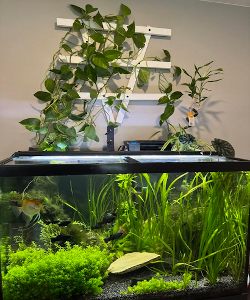
Pothos
- Scientific name: Epipremnum Aureum (originally classified as Pothos aureus in 1880)
- Origin: Native to Society islands of French Polynesia
- Light: Moderate indirect sunlight, floor-dwelling vine in the shade of rainforest canopy
- Temperature: 65F to 85F
- Humidity: 40% to 60% is optimal
- Fertilizer: Nitrogen rich for foliage and climbing vines to prevent leggy gaps between leaves
- Propagation: Easy with cuttings
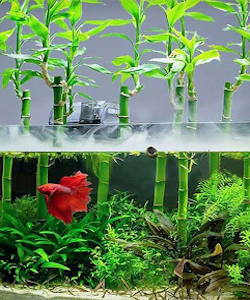
Lucky Bamboo
- Scientific name: Dracaena Sanderiana (not true bamboo)
- Origin: Native to tropical rainforests in Camaroon, West Africa
- Light: Moderate indirect sunlight, floor-dwelling in the shade of rainforest canopy
- Temperature: 65F to 85F
- Humidity: 40% to 60% is optimal
- Fertilizer: Low feeders, requiring very little fertilizer
- Propagation: Easy with cuttings
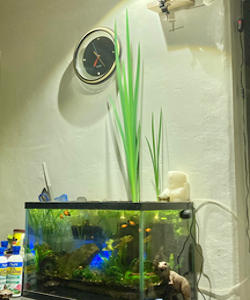
Walking Iris
- Scientific name: Neomarica or Trimezia Gracilis
- Origin: Native to tropical rainforests in Brazil
- Light: Moderate indirect sunlight, floor-dwelling in the shade of rainforest canopy
- Temperature: 65F to 85F
- Humidity: 50% to 70% is optimal
- Fertilizer: Low nitrogen, high phosphorus/potassium
- Propagation: Easy with "walking," heavy bloom stalks bend toward the ground and small plantlets form at the end of cuttings, a colony "walks" or spreads over a patch of ground over time