Plant Types
A wide variety of aquatic plants and plant types are available for aquariums that can used for creating nature inspired aquascapes. When selecting plants consider the lighting and nutrient needs to ensure they thrive in a given aquarium system. Other considerations for plant choices include where a given plant is located in the tank (eg., background, midground, foreground, floating), and their care requirements (eg., fast growing requiring frequent trimming or slow growing). There are many more plant options that can be factored in depending on the purpose or aesthetic of a given aquarium. Growing plants can be as satisfying as keeping fish or shrimp or snails, and the wide variety available can offer much pleasure.
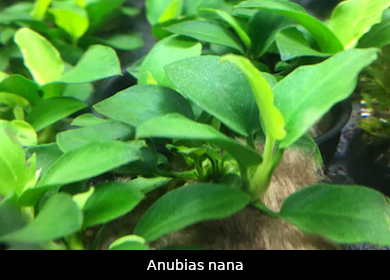
Rhizome Plants
- Leaves and roots sprout from tubular rhizomes
- Not rooted in substrate (usually lethal), but grown as epiphytes, attached to hardscape (rocks or driftwood) by means of line or glue
- Most varieties are slow growing, not requiring a lot of light, or CO2 injection, or liquid fertilizer (depending on bioload waste)
- Popular, hardy species
- Anubias species (barteri, caladiifolia, nana)
- Bucephalandra kedegang
- Bolbitis heuloti
- Java fern
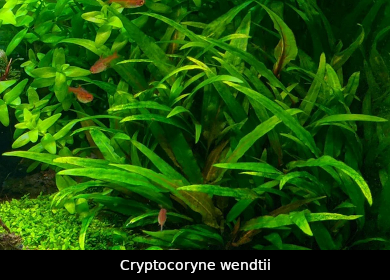
Rosette Plants
- Many varieties are adaptable and easy to grow
- Leaves come forth from a central location and spread out
- Planted with roots in substrate
- Most species are slower growing than stolon and stem plants
- Popular, hardy species
- Echinodorus belheri
- Echinodorus aquartics
- Cryptocoryne wendtii
- Cryptocoryne bekettii
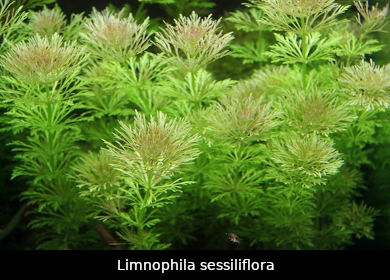
Stem Plants
- Grow from a single long stem, leaves sprouting out from that stem
- Many species grow tall, often placed in background
- While they do well rooted in substrate, they can also float and absorb nutrients from the water column
- Many varieties grow fast, needing trimming often
- The following species are adaptable
- Hygrophila polysperma
- Rotala rotundifolia
- Limnophila sessiliflora
- Pearlweed
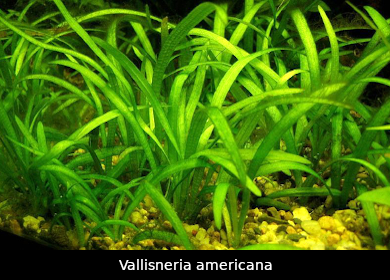
Stolon Plants
- Most species have a grass-like look, used for ground cover, carpeting
- Plant in the substrate and let them spread roots
- They send out horizontal stems (stolon) at substrate level with new plants growing at the nodes
- The carpeting varieties generally need a lot of light
- Hardy species
- Vallisneria americana
- Vallisneria spiralis
- Vallisneria australis
- Sagittaria subulata
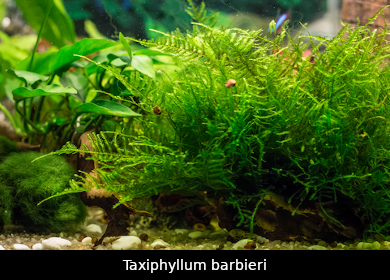
Moss Plants
- Epiphytic plant attached to hardscape via thread or glue
- Moss is slow growing, but spreads
- Often used for aesthetics
- Good in shrimp tanks, provides a lot of surface area for bio-film and micro-algae
- Propagation is easy, even from small fibers
- Hardy species
- Taiwan moss (Taxiphyllum alternans)
- Java moss (Taxiphyllum barbieri)
- Christmas moss (Vesicularia montagnei)
- Weeping moss (Vesicularia ferriei)
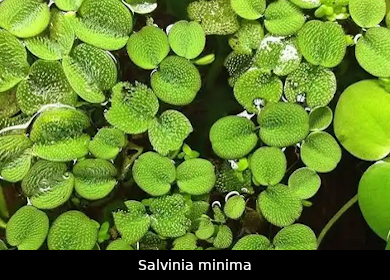
Floating Plants
- Rest on the water surface, draw CO2 from the atmosphere
- Moss is slow growing, but spreads
- Often used for aesthetics
- Good in shrimp tanks, provides a lot of surface area for bio-film and micro-algae
- Propagation is easy, even from small fibers
- Hardy species
- Taiwan moss (Taxiphyllum alternans)
- Java moss (Taxiphyllum barbieri)
- Christmas moss (Vesicularia montagnei)
- Weeping moss (Vesicularia ferriei)
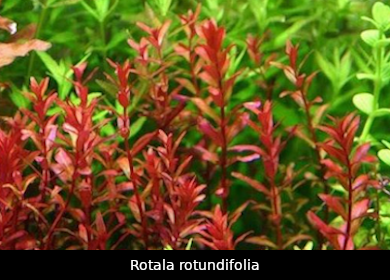
Red Plants
- Red plants add nice contrast and color variety to aquascapes
- The challenge of mixing green and red plants is the differing light requirements
- Anthrocyanins, plant pigments, are responsible for red colors
- Propagation is easy, even from small fibers
- Hardy species
- Rotala rotundifolia
- Rotala indica
- Ludwigia palustris
- Ludwigia repens rubi
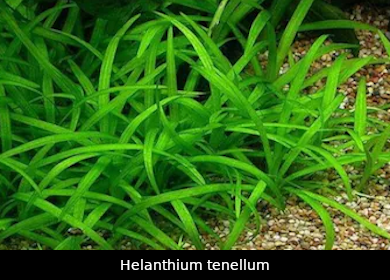
Carpeting Plants
- Not really a plant type, but a matter of use
- Light is a major factor because of the distance the light must penetrate to get to the substrate level
- Anthrocyanins, plant pigments, are responsible for red colors
- Propagation is easy, mostly stem or stolon types
- Hardy species
- Helanthium tenellum green
- Eleocharis parvula
- Litorella uniflora
- Marsilea hirsuta