On Tasting Beer
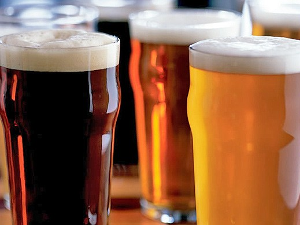
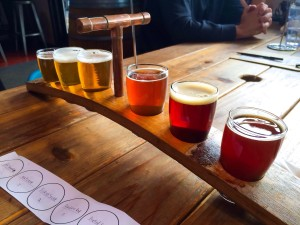
A sampler of beers makes a beautiful sight, with tones of amber and umber and gold, and a wondrous variety of aromas and flavors, all to be enjoyed.
Naturally, we all have our own preferences, so we don't all savor the same beers with the same relish. Yet, there are things we all do to enjoy tasting beer, regardless of style. For example, we look at it, we smell it, and we taste it.
Of course, one can simply pop a can, drink it and enjoy it, especially while doing something else, like watching a game on TV, but that isn't really "tasting beer."
Tasting beer or, to be more specific, evaluating beer takes a little time set apart to appreciate a couple of beers or more of differing styles with some focus. It can be done alone, but it can also be a lot of fun with friends who also enjoy experiencing various beers, even if not every beer sample is to everyone's particular liking.
Analyzing a beer involves four general elements: Look, smell, taste, and finish. Giving attention to each of these elements in turn can be very satisfying when tasting beer.
1) Look: Pause to admire the color and consistency of the beer. What's the color? Is it hazy or clear? How does the head look? What color is the head? Move the beer around a bit to gain different lighting perspectives. There's much to appreciate in the appearance of a good beer.
2) Smell: Raise the beer up to your nose and take a couple of good sniffs. Try breathing it in through the mouth, too. Smelling is a large part of the tasting experience, as those two senses work together closely. Swirling the beer gently can enhance the aroma. How does it smell? What nuances can be detected? Revel in its unique bouquet.

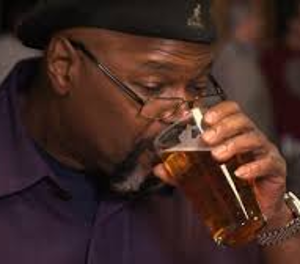
3) Taste: Now's the time for that first sip, but before sipping it's good to be aware of our expections. How we expect a beer to taste can affect our perceptions when we take those first couple of sips. Ideally, we recalibrate our palate (expectations wiped clean) before sampling, allowing each beer to speak for itself. Now sip, and resist the urge to swallow immediately. Take time to explore.
What flavors come through? What, if anything, dominates? What's in the background? How do the malts and hops work together? How's the mouthfeel or body? Is it thin like water or full like milk or somewhere in between? Is it sweet or bitter or balanced?
To gain the best sense of a beer, it often helps to withhold judgment until after several sips. A third or fourth sip may taste better than the first one or two.
4) Finish: After swallowing, the experience continues. The finish completes the tasting, consisting of whatever flavors and sensations remain after swallowing. Aftertaste? What flavors linger? Is it sweet or dry? Smooth or harsh? How's the mouthfeel now? Any warmth, as in a strong beer?
So, those are four things that help us appreciate beers that we are tasting. Of course, at each step we could ask more questions.
Describing the elements of beer tasting has become highly developed and nuanced, and books are written on the subject. Some suggestions are listed below if you want to go deeper.
Suggested resources:
Tasting Beer, by Randy Mosher.
Evaluating Beer, by Brewers Publications.
The Beer Enthusiasts Guide, by Greg Smith.
BJCP Study Guide, by Beer Judge Certification Program.